Early, Mid and Late Lilacs: A Bloom-Time Comparison for UK Gardens

Early, Mid and Late Lilacs: A Bloom-Time Comparison for UK Gardens
Lilac season in Britain often feels shorter than it should. A warm spell in the middle of May and the whole performance is over: petals browning, scent fading, and the shrubs settling into green anonymity for another eleven months. But that compressed season is not inevitable. By choosing early, mid and late lilacs deliberately, UK gardeners can stretch the flowering period from late April into early July, and in cooler northern or coastal gardens even a little beyond. The key is to understand which species and cultivars bloom when, and how local conditions shift those timings.
Why Bloom Time Matters in the UK
British springs are famously variable. A mild March can push lilacs forward by a fortnight; a cold east wind in April can hold them back just as sharply. In a single garden, the difference between an early Syringa x hyacinthiflora and a late Syringa villosa can be six to eight weeks. That gap is the difference between a fleeting moment and a proper season.
Gardeners often plant a single Syringa vulgaris because it is the lilac they remember from childhood. It is a wonderful shrub, but it represents only the middle of the story. Add one early cultivar and one late species, and the garden gains weeks of scent, colour and pollinator interest. The strategy is simple: overlap the waves rather than replacing one with another.
The Three Waves of Lilac Bloom
Think of lilac season as three overlapping waves. Each wave has its own mood, scent and palette. Early lilacs are fresh and often intensely perfumed; mid-season lilacs are the classic, full-headed beauties; late lilacs are quieter, sometimes spicier, and invaluable for carrying the garden into summer.
Early Lilacs: The Opening Act
Early lilacs typically begin in late April and finish around mid-May. The main group is Syringa x hyacinthiflora, a hybrid race that flowers roughly seven to ten days before common lilac. These shrubs are vigorous, hardy and generous with bloom. Their scent is usually strong and sweet, though often a little sharper than the rich perfume of Syringa vulgaris.
- 'Pocahontas' — deep purple buds opening to reddish-purple flowers; excellent for a dark, dramatic early display.
- 'Maiden's Blush' — soft pink, slightly ruffled blooms that catch low spring light beautifully.
- 'Mount Baker' — a clean white early lilac, useful for lighting up a shady corner before the main season begins.
- 'Blue Hyacinth' — lavender-blue panicles with a reputation for flowering freely in cooler UK summers.
Early lilacs can be caught by late frosts in exposed gardens. A sheltered spot, ideally with morning sun and some protection from cold winds, helps preserve the first flush of flowers. In mild coastal areas, they may open even earlier, sometimes before the end of April.
Mid-Season Lilacs: The Main Event
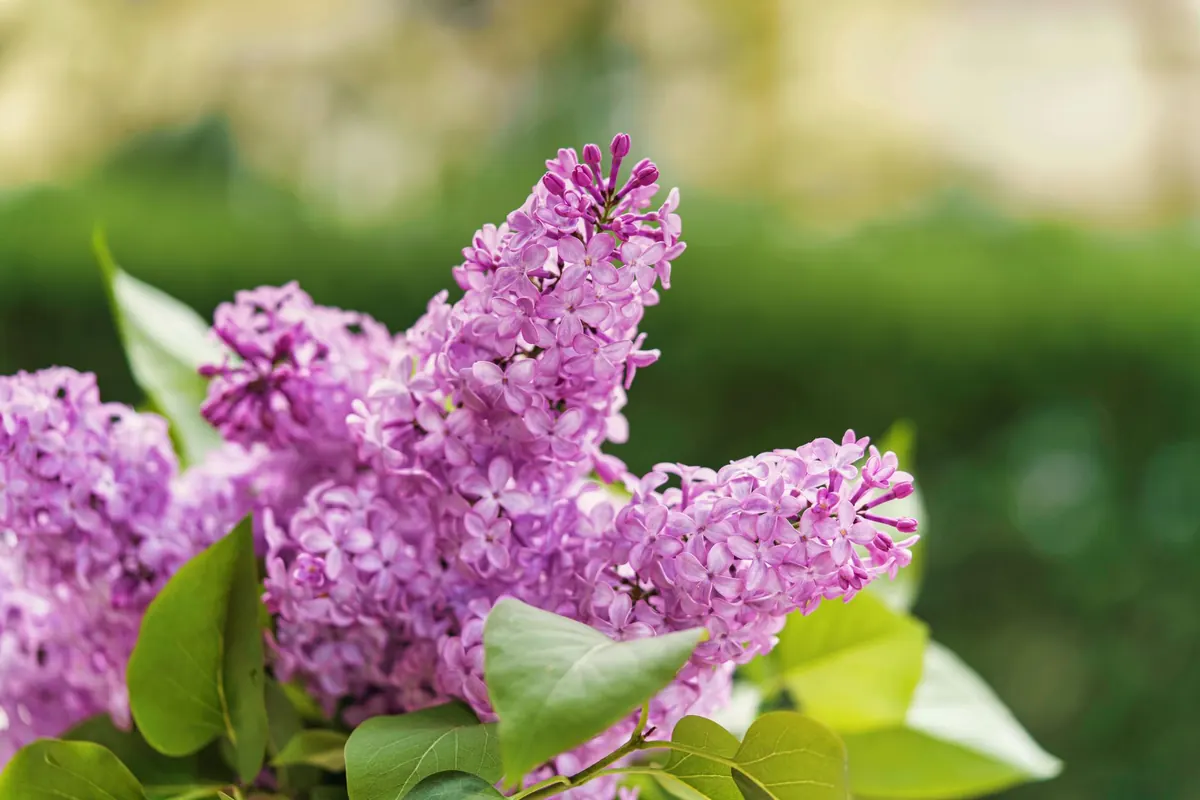
Mid-season lilacs are the garden's centrepiece. This is the realm of Syringa vulgaris, the common lilac, and its hundreds of named cultivars. They usually flower from mid-May to early June, depending on latitude and weather. Their panicles are dense, their colours range from white through cream, pink, lavender, blue and deepest purple, and their scent is the one most people mean when they say "lilac."
- 'Charles Joly' — rich magenta-purple, single flowers, and a strong, old-fashioned fragrance.
- 'Katherine Havemeyer' — lavender-pink double blooms that look full and luxurious for weeks.
- 'Madame Lemoine' — a classic double white, slightly creamy in bud, brilliant against dark foliage.
- 'Sensation' — purple flowers edged in white; a striking bicolour that draws attention even from a distance.
- 'Primrose' — pale creamy-yellow, unusual among lilacs and lovely with bronze or purple foliage.
Because so many cultivars belong to this group, it is easy to create a mid-season sequence within the mid-season itself. Choose an early-flowering vulgaris such as 'Charles Joly' and a later one such as 'Katherine Havemeyer', and the main event lasts longer than a single variety would allow.
Late Lilacs: The Encore
Late lilacs begin as the common lilacs fade, usually from early June to early July. They are not always as fragrant as Syringa vulgaris, but they are invaluable for extending the season and for linking the garden to early summer perennials. This group includes several species rather than one dominant hybrid race.
- Syringa josikaea — Hungarian lilac, with deep violet flowers in June and a neat, upright habit.
- Syringa villosa — late lilac, pale pink to lilac blooms in dense clusters; tough and reliable.
- Syringa komarowii subsp. reflexa — nodding, narrow panicles in June and July; unusual and graceful.
- Syringa pubescens subsp. microphylla 'Superba' — small leaves, rosy-lilac flowers, and often a second, lighter flush in late summer.
- Syringa reticulata — Japanese tree lilac, with creamy-white panicles in June and July; more tree-like and excellent for small gardens.
Late lilacs are especially useful where the garden is viewed from a window in June. They also feed bees and other pollinators at a time when early lilacs are long finished. If you have room for only one late lilac, Syringa pubescens 'Superba' is a fine choice for its compact size and repeat-flowering tendency.
A Bloom-Time Comparison at a Glance
- Early lilacs: late April to mid-May; main groups Syringa x hyacinthiflora and Syringa oblata; strong sweet scent; colours purple, pink, white; height usually 2–4 m.
- Mid-season lilacs: mid-May to early June; main group Syringa vulgaris; classic lilac scent; widest colour range; height 2–5 m.
- Late lilacs: June to early July; main groups Syringa villosa, Syringa josikaea, Syringa komarowii, Syringa reticulata and Syringa pubescens; scent variable, often spicy or clove-like; colours pale pink, lilac, cream; height 1.5–6 m depending on species.
How UK Conditions Shift Bloom Times
Bloom times are not fixed dates. They are responses to temperature, light and soil. In the UK, several local factors can move a lilac forward or back by two or three weeks.
- Latitude: Gardens in Cornwall and southern coastal counties often see early lilacs in late April, while northern Scotland may wait until late May or early June.
- Altitude: Every 100 metres of elevation can delay flowering by several days, especially in Wales, the Pennines and the Scottish Highlands.
- Coastal influence: Sea air moderates winter cold but can also slow spring warmth. Coastal lilacs may flower later than inland ones, but they suffer fewer frost-damaged buds.
- Aspect: A south- or west-facing wall can advance bloom by a week or more. A north-facing border may delay it and extend the display.
- Soil: Lilacs flower best in neutral to alkaline, well-drained soil. Very acidic, waterlogged or shallow chalky soils can shorten the bloom and reduce fragrance.
- Urban heat: Town gardens are often warmer than surrounding countryside, so city lilacs may open earlier and finish faster unless watered during dry spells.
Planting for a Continuous Season
To create a lilac season that lasts from late April into July, plant in overlapping groups rather than a single row of one cultivar. Use the following sequence as a guide.
- Start with an early hybrid. Plant Syringa x hyacinthiflora 'Pocahontas' or 'Maiden's Blush' in a sunny, sheltered spot.
- Follow with two mid-season vulgaris lilacs. Choose one early mid-season cultivar and one later one, such as 'Charles Joly' and 'Katherine Havemeyer'.
- Add a compact late lilac. Syringa pubescens 'Superba' is ideal for a small garden and may repeat-flower.
- Finish with a tree lilac if space allows. Syringa reticulata 'Ivory Silk' gives creamy panicles in June and July and needs little pruning.
- Stagger by aspect. If you have several lilacs of the same cultivar, plant one on a cooler north-facing border to delay its bloom by a week or two.
Extra Useful Section: Companion Plants That Carry the Season
Lilacs are brief stars, so pair them with plants that extend the display before, between and after their flowers. Early lilacs look wonderful with wallflowers, forget-me-nots, honesty and early tulips. As the mid-season lilacs open, bearded irises, peonies, hardy geraniums and nectar-rich alliums take over the stage. For late lilacs, choose philadelphus, weigela, kolkwitzia, lavender and perovskia to continue the colour into high summer.
Underplanting also hides the lilac's bare ankles. Lilacs are naturally leggy shrubs, and a low skirt of Geranium 'Rozanne', alchemilla or hardy cranesbill softens their outline without competing for moisture. Avoid planting vigorous climbers or greedy shrubs right at the base; lilacs resent root disturbance and competition.
Extra Useful Section: Pruning, Soil and Aftercare for Better Bloom
Lilacs flower on old wood, which means the buds for next spring are formed in the previous summer. Prune at the wrong time and you remove the following year's display. The golden rule is to prune immediately after flowering, removing dead, damaged or crossing stems and thinning the oldest wood to encourage new growth. Deadhead the faded panicles before they set seed, but leave the current season's shoots intact.
- Soil: Aim for a pH of 6.5 to 7.5. If your soil is acidic, add garden lime in autumn according to a soil test.
- Drainage: Lilacs hate wet feet. On heavy clay, plant on a slight mound and incorporate grit or organic matter.
- Sun: Full sun gives the best bloom and scent. At least six hours of direct light is ideal.
- Watering: Water young plants in dry spells. Established lilacs are drought-tolerant once rooted.
- Mulching: Apply a mulch of well-rotted compost or bark in spring, keeping it clear of the trunk.
- Suckers: Remove suckers from the base of grafted plants if you want a clean, tree-like shape.
Plant lilacs for May, but choose late lilacs for memory. A garden that flowers in July is a garden that keeps its promise.
Common Pitfalls and Quick Fixes
- No flowers: Usually too much shade, pruning at the wrong time, or excessive nitrogen. Move to sun, prune after bloom, and avoid rich feeding.
- Mildew: Common in humid UK summers. Improve air circulation, water at the base, and choose resistant species such as Syringa reticulata.
- Leggy growth: Lightly renovate after flowering by cutting one or two old stems to the base each year. Do not hard-prune all at once.
- Short bloom: A sudden heatwave can finish the display quickly. Water deeply before and during flowering, and plant late lilacs to cover the gap.
- Frost damage: Early lilacs are most at risk. Choose a sheltered site or accept that some years will be better than others.
Final Thoughts
Early, mid and late lilacs are not three separate pleasures to choose between; they are three movements in one long performance. In a UK garden, the difference between a two-week lilac moment and a ten-week season is mostly a matter of planning. Plant a Syringa x hyacinthiflora for the first warm days, a Syringa vulgaris for the heart of May, and a late species such as Syringa josikaea or Syringa reticulata for the encore. Add good soil, full sun and a little after-flower pruning, and the scent of lilac can follow you from spring almost to midsummer.
Photo: Peggychoucair / Pixabay